6th Nov 2026
Preventing diesel bug begins with water control, clean fuel, sound tank housekeeping, inspection and filtration. A preventative biocide can be useful where it is permitted and dosed exactly to the product label, but it does not replace removing free water, repairing a leaking filler cap or cleaning a badly contaminated tank.
“Diesel bug” is a convenient boating term for microbial contamination involving bacteria, yeasts or moulds in diesel fuel systems. Growth is most likely where water and fuel meet. During winter lay-up, long storage periods, condensation, rainwater ingress and low fuel turnover can allow a small problem to become blocked filters, sludge and engine stoppage next season.
Pirates Cave supplies fuel additives, treatments and filters, including Marine 16 treatments and diesel test products.
The key principle: microbes need water. Treat water ingress and tank-bottom water as the primary risk, then use testing, filtration and an approved treatment plan. Pouring more additive into a wet, dirty tank can delay proper remediation.
Contents
- Key facts at a glance
- What is diesel bug?
- How water gets into a diesel tank
- Symptoms and diagnosis
- Winter lay-up prevention plan
- Should the tank be full or empty?
- Sampling and diesel-bug testing
- Preventative and shock treatment
- When fuel polishing or tank cleaning is needed
- Filters and engine recommissioning
- Common mistakes
- Frequently asked questions
- Technical references
Key facts at a glance
- Diesel bug is microbial contamination, not one single organism.
- Microbes commonly develop at the interface between diesel and free water.
- Rainwater through a filler, contaminated fuel, condensation, damaged vents and poor tank housekeeping can introduce water.
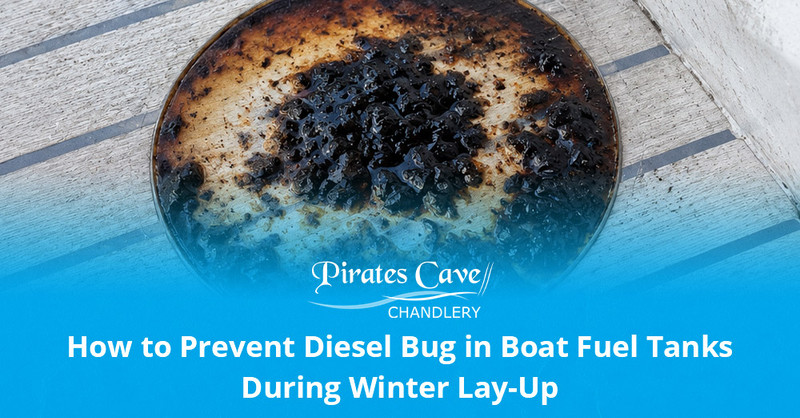
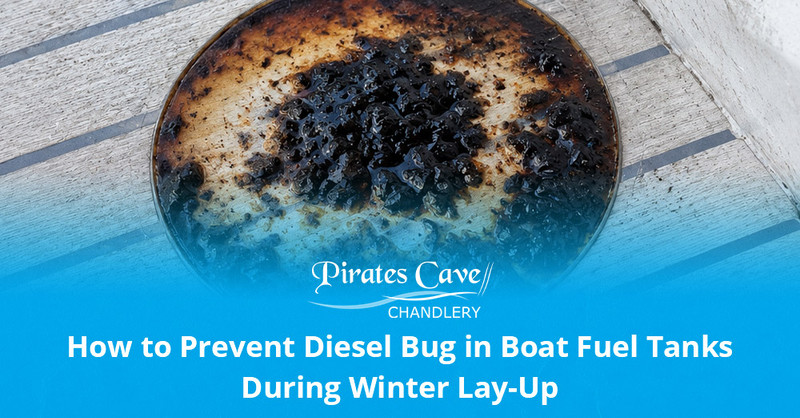
- Black or brown sludge is not automatically microbial; rust, dirt, degraded fuel and asphaltene deposits can look similar.
- A representative bottom sample and an appropriate test are more useful than guessing from the fuel at the top of the tank.
- Use biocides only according to the approved label, correct dosage and safety instructions.
- Killing microbes can release debris that blocks filters; carry spares and monitor restriction after treatment.
- Severe contamination may require fuel removal, tank cleaning, line flushing and professional fuel polishing.
- Preventative treatment cannot repair a leaking deck filler or remove centimetres of tank-bottom water.
- Keep records of fuel source, treatment, samples, filter changes and unusual engine behaviour.
What is diesel bug?
Microorganisms can enter fuel through air, water, supply chains and previous contamination. When suitable water, nutrients and temperature are present, they multiply and produce biomass, acids and sludge. The contamination can:
- block primary and secondary fuel filters
- restrict pickup pipes and small passages
- corrode tanks and fuel-system components
- damage seals or coatings in severe cases
- cause rough running, loss of power or engine stoppage
- contaminate newly added fuel
The term includes different organisms and conditions, so one visual symptom cannot identify the exact cause or severity. A test and inspection are preferable to treating every dark deposit as biological growth.
How does water get into a boat’s diesel tank?
| Water source | Clues | Preventative action |
|---|---|---|
| Leaking deck filler cap or damaged O-ring | Water appears after rain or washing; staining around filler | Replace seal or cap, clean the deck recess and keep drains clear |
| Tank vent exposed to spray or rain | Water ingress in rough weather or at one berth orientation | Check vent position, loop, hose and fitting without obstructing ventilation |
| Condensation and moist air exchange | Small amounts accumulate during long storage | Follow tank-maker storage guidance and remove bottom water regularly |
| Contaminated bunkered fuel | Problem appears after refuelling; multiple filters load quickly | Buy from high-turnover suppliers and retain records/sample where practical |
| Damaged inspection hatch or sender gasket | Diesel smell, dampness or staining at tank top | Renew compatible seals and fasteners |
| Water returned from another system or incorrect plumbing | Unusual routing or recent modifications | Have the fuel system traced and corrected professionally |
| Flexible tank or hose deterioration | Soft, cracked or porous material; debris in sample | Replace with components approved for the fuel and installation |
Locate the lowest point of the tank. Water sits beneath diesel, so a sample drawn from the upper layer can look clean while contamination is developing at the bottom.
What are the symptoms of diesel bug?
| Symptom | Possible diesel-bug connection | Other possible causes |
|---|---|---|
| Dark slime or stringy material in a sample | Microbial biomass may be present | Old sealant, tank coating, dirt or degraded fuel |
| Frequent primary-filter blockage | Dead or living biomass may load the element | Rust, dirt, wax, asphaltenes or collapsing hose |
| Water in separator bowl | Provides an environment for growth | Recent contaminated fuel or direct rainwater ingress |
| Loss of power at high demand | Restricted filter or pickup | Air leak, blocked vent, injector fault or propeller load |
| Engine stops in rough water | Tank deposits stirred into pickup | Loose electrical connection, air entry or fuel starvation |
| Pitting or corrosion inside metal tank | Microbial by-products can contribute | Water alone, incompatible material or general corrosion |
| Sour or unusual odour | Can accompany microbial activity | Ageing fuel or chemical contamination |
Do not open fuel lines or inspection hatches beside ignition sources. Diesel is less volatile than petrol but still presents fire, inhalation, skin-contact and environmental risks.
Step-by-step diesel-bug prevention for winter lay-up
- Review the season. Note filter changes, water drained, poor fuel sources, rough running and any long idle periods.
- Inspect the deck filler and vent. Renew damaged seals and stop water ingress before treating fuel.
- Take a bottom sample. Use the tank’s approved drain, sampling point or professional method. Do not improvise with unsafe pumping equipment.
- Remove free water. Drain the separator and tank bottom according to the system manual and dispose of contaminated liquid correctly.
- Test when risk is credible. A diesel-bug test can help distinguish microbial activity from ordinary sediment.
- Assess contamination severity. Clean fuel with no free water needs a different response from thick sludge and repeated filter blockage.
- Use an approved preventative product if appropriate. Measure actual tank volume and follow the label.
- Circulate or distribute only as instructed. Do not run an engine in an enclosed or inadequately ventilated storage area.
- Service filters strategically. A fresh element before lay-up can provide a clean baseline; carry additional spares after treatment.
- Record the work. Date, fuel quantity, test result, treatment dose and filter details should be logged.
Biocide safety: fuel biocides are regulated chemical products. Wear the specified protective equipment, measure accurately, avoid skin and environmental exposure, and never combine products unless the manufacturers explicitly confirm compatibility.
Should a diesel tank be left full or empty over winter?
There is no safe universal answer for every boat. The decision depends on tank material, drainage, storage period, fuel stability, fuel specification, expected temperature change, access for cleaning and the engine or tank manufacturer’s instructions.
| Approach | Potential advantage | Potential disadvantage |
|---|---|---|
| Store with a high fuel level | Reduces humid air space and can limit condensation in some installations | Leaves more ageing fuel to remediate if contaminated; expansion space is still required |
| Store with a low fuel level | Less old fuel remains and tank cleaning may be easier | More air exchange and exposed tank surface; cannot be used where maker advises otherwise |
| Drain and professionally clean | Removes water, sludge and contaminated fuel | Requires safe access, disposal and recommissioning; not practical for every built-in tank |
Whatever level is selected, the priorities are:
- no free water at the tank bottom
- no active leak through filler, vent or hatch
- fuel within the storage guidance of the supplier and engine maker
- enough expansion space
- a documented spring sampling and filter plan
Do not fill to the brim. Fuel expands and can escape through the vent or filler, creating pollution and fire risk.
How do you test for diesel bug?
A useful test starts with a representative sample from the area most likely to hold water and deposits. The tank top is rarely the best location. Test kits vary: some indicate microbial activity, while laboratory analysis can provide more detailed identification and contamination levels.
Sampling principles
- use clean, fuel-compatible equipment
- sample from the lowest accessible point
- avoid stirring the tank immediately beforehand unless the test method requires it
- label the sample with date, location and tank level
- observe water layer, haze, particles and sludge
- follow the test’s temperature and reading-time instructions
- do not pour the sample back into the tank
A negative test does not prove that no contamination exists in an unsampled corner, and a positive result does not by itself define the required remediation. Combine test results with water quantity, filter condition and operating symptoms.
When does a diesel treatment help?
Preventative dose
A labelled preventative dose can reduce microbial growth risk in clean fuel after free water and water ingress have been addressed. It is not a substitute for inspection. Measure the actual fuel volume rather than dosing from the nominal tank capacity.
Remedial or shock dose
A higher labelled dose may be specified for confirmed contamination. Killing organisms can release material into the fuel, so filters may block soon after treatment. Follow the product’s contact time and circulation instructions and keep enough compatible filter elements on board.
Fuel stabiliser, cetane improver and biocide are not the same
One additive may address oxidation or injector cleanliness without controlling microbes. Another may be an approved biocide but provide no broader fuel-conditioning claim. Read the intended function and avoid an additive cocktail.
When selecting from Marine 16 treatments or another range, match the product to prevention, testing, injector cleaning or contamination remediation rather than assuming every bottle performs all tasks.
When is fuel polishing or tank cleaning needed?
Professional intervention is appropriate when:
- thick sludge or a substantial water layer is present
- filters block repeatedly after treatment
- the engine has stopped or fuel pressure is restricted
- tank corrosion, delamination or coating failure is suspected
- access is difficult or involves entering a confined space
- a large fuel quantity must be transferred or disposed of
- the pickup, return, lines and day tank may all be contaminated
Fuel polishing circulates fuel through staged separation and filtration. It can remove suspended water and debris, but it may not clean deposits firmly attached to tank walls or repair a damaged tank. Physical tank cleaning may still be required.
Never enter a fuel tank. Confined spaces can contain toxic or oxygen-deficient atmospheres and require specialist procedures.
What should you do with fuel filters?
Inspect the primary water separator and the engine-mounted secondary filter. Record contamination before disposal. Replace with the exact approved element and seal, fill or prime according to the engine manual, and check for leaks.
After remedial treatment:
- carry several spare primary and secondary elements
- know how to stop the engine and isolate fuel safely
- monitor vacuum or restriction gauge where fitted
- conduct an initial run in a safe location
- recheck the separator after the tank has been agitated by use
- do not set out on a critical passage until fuel delivery is proven
Common diesel-bug prevention mistakes
| Mistake | Why it fails | Better approach |
|---|---|---|
| Treating without removing water | The environment for regrowth remains | Drain water and repair ingress first |
| Assuming every dark deposit is diesel bug | Rust and fuel degradation need different action | Sample, inspect and test |
| Overdosing by nominal tank size | Can breach the label and create handling risk | Measure current fuel volume and dose exactly |
| Mixing several additives | Chemical compatibility and engine effects may be unknown | Use one evidence-based treatment plan |
| Ignoring filters after shock treatment | Dead biomass can stop the engine | Carry spares and monitor restriction |
| Filling the tank to the brim | Thermal expansion can discharge fuel | Leave the specified expansion space |
| Cleaning only the tank | Contaminated lines and filters can reseed the system | Treat the complete fuel path |
| Entering the tank | Confined-space poisoning and explosion risk | Use a qualified tank-cleaning contractor |
Inspect, test and treat the fuel system methodically
Browse fuel additives, treatments and filters, including Marine 16 diesel treatments and test products.
Before purchasing, identify tank capacity and current fuel volume, engine model, filter element numbers, visible water, test result and symptoms. Contact Pirates Cave for product help; use a fuel specialist where sludge, corrosion or repeated blockage is present.
Frequently asked questions about diesel bug
What does diesel bug look like?
It can appear as dark slime, strings, haze, sediment or material in filters, often near water. Those signs are not exclusive to microbes. Rust, degraded fuel and dirt can look similar, so use a representative sample and test.
Can diesel bug grow without water?
Microbial contamination is strongly associated with water in the fuel system, especially at the fuel-water interface. Very small amounts can be enough. Removing free water and stopping ingress are therefore fundamental controls.
Does filling the tank prevent diesel bug?
A higher fuel level may reduce humid air space in some tanks but does not remove existing water or contamination. It can also leave a larger quantity of ageing contaminated fuel. Follow the tank and engine maker’s storage guidance.
Will diesel bug treatment clean the tank?
A biocide can kill susceptible microbes when used correctly, but it does not physically remove water, rust or heavy sludge. Severe contamination may require fuel polishing, line flushing and tank cleaning.
How quickly does diesel bug treatment work?
Contact time varies by product and dose. Use the label rather than a generic timetable. Allow for released debris to reach filters after the engine returns to service.
Can I overdose diesel additive?
Never assume overdosing is harmless. Approved concentration, material compatibility and safety are product-specific. Measure fuel volume and follow the exact label, including protective equipment and maximum dose.
Can diesel bug damage an engine?
Contamination can restrict fuel supply, block filters, contribute to corrosion and cause poor running or stoppage. Abrasive or corrosive material can also affect precision fuel components. Early detection reduces risk.
How often should I test boat diesel?
Base testing on risk: known water ingress, long storage, low turnover, previous contamination, suspect fuel or repeated filter debris justify more frequent checks. A baseline sample before lay-up and another before spring use can be useful.
Should I change filters before or after treatment?
That depends on severity and product instructions. Begin with serviceable filters, but expect remedial treatment to release debris and require early replacement. Keep the exact spare elements aboard.
Can diesel bug spread from one tank to another?
Yes. Shared transfer pumps, return lines, hoses, containers and polishing equipment can carry contamination. Treat the connected system and use clean sampling or transfer equipment.
Is diesel bug more common with biodiesel?
Fuel composition can influence water behaviour and storage stability, but contamination risk depends on the whole supply and tank environment. Use fuel meeting the engine maker’s specification and maintain rigorous water control.
What should I do if the engine stops from a blocked filter?
Move to the vessel’s safe-engine-failure procedure, call for assistance where necessary and avoid repeated unsafe restarting. Replace and prime filters only if trained, then investigate the tank before relying on the engine again.
Technical references
- Energy Institute: Microbial contamination investigation, prevention and remediation guidance
- Marine 16: Product labels and diesel-system guidance
- Health and Safety Executive: UK biocides guidance
Important: Follow the fuel, engine, tank, filter and treatment manufacturers. Fuel transfer, tank entry and severe contamination require specialist controls. Dispose of water, sludge, filters and fuel through an authorised route and prevent discharge into the water.