14th Aug 2026
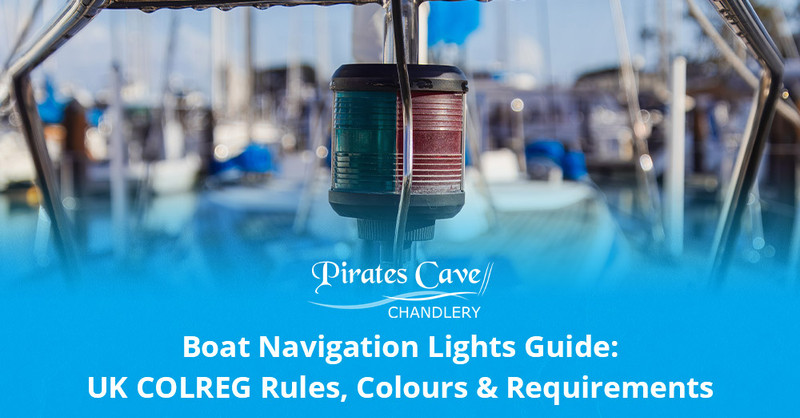
Boat navigation lights tell other vessels what you are, which way you are travelling and, in some cases, what you are doing.
At night, the difference between seeing a red light, a green light or two white lights is not decorative. It can tell a skipper whether another vessel is crossing, overtaking, anchored, fishing, restricted in its ability to manoeuvre or potentially unable to keep clear.
For UK boat owners, the principal rules come from the International Regulations for Preventing Collisions at Sea 1972, as amended – normally called the COLREGs. In the UK, these rules are given effect through the Merchant Shipping (Distress Signals and Prevention of Collisions) Regulations 1996.
This guide explains boat navigation light rules in straightforward language first, before going into the technical detail needed when selecting, installing or checking marine navigation lights.
The essential rule: the navigation lights a boat needs depend on its length, method of propulsion, speed and what the vessel is doing. A sailing yacht using its engine, for example, is treated as a power-driven vessel under the COLREGs.
Regulatory information checked: August 2026.
Important: COLREG compliance is the starting point, but it may not be the only requirement. Harbour, river and local navigation byelaws can impose additional requirements, while commercially operated, coded or surveyed vessels may be subject to further equipment, approval and inspection standards.
Contents
- Key facts at a glance
- What are navigation lights?
- Port, starboard and navigation light colours
- When must navigation lights be displayed?
- Underway, making way, sailing and power-driven vessels
- COLREG Rule 21: navigation light sectors
- COLREG Rule 22: minimum visibility ranges
- Navigation lights for powerboats
- Navigation lights for sailing yachts
- Anchor lights
- Kayaks, rowing boats and dinghies
- Fishing and specialist vessel lights
- How to identify vessels from their lights
- Where navigation lights should be mounted
- LED navigation lights and replacement bulbs
- Navigation light maintenance
- Choosing the correct navigation lights
- Frequently asked questions
- Official sources and further reading
Key facts at a glance
- Port is red and is the vessel's left-hand side when facing forward.
- Starboard is green and is the vessel's right-hand side when facing forward.
- A masthead light is white and covers 225°.
- Each sidelight covers 112.5°.
- A sternlight is white and covers 135°.
- An all-round light covers 360°.
- Navigation lights must be shown from sunset to sunrise.
- They must also be displayed during daylight in restricted visibility.
- A sailing yacht using its engine is treated as a power-driven vessel.
- A power-driven vessel under 12m may use red and green sidelights plus an all-round white light.
- The special under-7m powerboat provision also requires a maximum speed not exceeding 7 knots.
- Green over white means trawling.
- Red over white means fishing other than trawling.
- Red-white-red means restricted in ability to manoeuvre.
- Two vertical red lights most commonly mean not under command.
- An aftermarket LED bulb is not automatically suitable for an existing approved navigation lantern.
Quick answer: which navigation lights does a boat need?
The navigation lights a boat needs depend mainly on its length, method of propulsion, maximum speed and operational status.
| Boat or situation | Typical COLREG lights |
|---|---|
| Power-driven vessel under 50m | White masthead light, red and green sidelights and white sternlight |
| Powerboat under 12m | May use red and green sidelights plus one all-round white light instead |
| Powerboat under 7m with maximum speed no more than 7 knots | May show an all-round white light and, if practicable, sidelights |
| Sailing yacht underway under sail | Red and green sidelights plus white sternlight |
| Sailing yacht under 20m | May combine sidelights and sternlight in a masthead tricolour |
| Sailing yacht using its engine | Treated as a power-driven vessel and displays the appropriate power-driven vessel lights |
| Boat at anchor under 50m | May show one all-round white anchor light |
| Vessel trawling | Green over white, plus sidelights and sternlight when making way |
| Vessel fishing other than trawling | Red over white, plus sidelights and sternlight when making way |
| Vessel not under command | Two all-round red lights |
| Vessel restricted in ability to manoeuvre | Red-white-red all-round lights |
These are summaries only. Vessel length and circumstances can change the complete light configuration. Rules 23, 25, 26, 27 and 30 contain the detailed requirements.
What are navigation lights?
Navigation lights are internationally standardised lights used to indicate a vessel's presence, direction of travel, type and operational status.
They are sometimes called nav lights, marine navigation lights, running lights or COLREG lights, although “running lights” generally refers to lights displayed while a vessel is underway.
COLREG Rule 21 defines the principal navigation lights according to their colour and the horizontal arc over which they are visible. The construction, positioning and technical performance of those lights is principally covered by COLREG Annex I.
The purpose of navigation lights is not simply to make a boat visible. The combination, colour and direction of the lights communicate information.
- Seeing red only will normally mean you are looking towards another vessel's port side.
- Seeing green only will normally mean you are looking towards its starboard side.
- Seeing both red and green means you are approximately ahead of the vessel.
- Seeing a sternlight can indicate that you are approaching from astern.
- Additional vertical combinations can identify fishing vessels, pilot vessels, vessels not under command and vessels restricted in their ability to manoeuvre.
Port, starboard and navigation light colours explained
If you are new to boating, two terms need explaining before learning navigation light colours.
Port means the boat's left-hand side when facing forward towards the bow.
Starboard means the boat's right-hand side when facing forward.
Therefore:
- Port navigation light = red
- Starboard navigation light = green
A simple way to remember it is:
Red = port = left.
Green = starboard = right.
If your installation uses separate lanterns, see our ranges of port-side navigation lights and starboard navigation lights.
When must navigation lights be displayed?
COLREG Rule 20 requires the prescribed navigation lights to be displayed from sunset to sunrise. They must also be displayed during daylight when visibility is restricted.
The Rule 20 requirements apply in all weathers. Between sunset and sunrise, other lights must not be displayed if they could be mistaken for COLREG lights, impair their visibility or distinctive character, or interfere with maintaining a proper lookout.
Navigation lights must also be displayed between sunrise and sunset in restricted visibility and may be displayed at other times when considered necessary.
Restricted visibility can include:
- fog;
- mist;
- falling snow;
- heavy rain;
- sandstorms; or
- other similar causes that reduce visibility.
Navigation lights are therefore not simply night-time lights. If you enter fog during the day, the relevant navigation lights should be displayed.
Underway, making way, power-driven and sailing vessels
COLREG terminology matters because a vessel's required lights can depend on its legal status rather than simply whether its engine is running.
What does underway mean?
A vessel is underway when it is not at anchor, not made fast to the shore and not aground.
This means a vessel can technically be underway without moving through the water.
A boat stopped in open water but neither anchored nor secured to shore remains underway for COLREG purposes.
What does making way mean?
Making way means that the vessel is actually moving through the water.
The distinction matters because several COLREG lighting rules require additional running lights when a specialist vessel is “making way through the water”.
For example, fishing vessels and certain vessels restricted in their ability to manoeuvre add sidelights and a sternlight when they are making way.
What is a power-driven vessel?
A power-driven vessel is any vessel propelled by machinery.
A motorboat, motor cruiser, powered RIB or yacht using its engine is therefore a power-driven vessel.
What is a sailing vessel?
For COLREG purposes, a sailing vessel is a vessel under sail provided that any propelling machinery fitted to it is not being used.
Is a sailing yacht using its engine a power-driven vessel?
Yes. A sailing yacht using its engine for propulsion is treated as a power-driven vessel under the COLREGs.
This remains the case even if the sails are still set.
At night, the yacht must therefore show the appropriate power-driven vessel lights rather than relying on a sailing tricolour.
During daylight, Rule 25 also requires a vessel proceeding under sail while simultaneously being propelled by machinery to display a cone with its apex pointing downwards forward where it can best be seen.
What is a vessel at anchor?
A vessel secured by its anchor is not “underway”. It normally displays the anchor lights prescribed by Rule 30 rather than ordinary running lights.
COLREG Rule 21: navigation light sectors explained
The direction in which a navigation light is visible is just as important as its colour.
| Navigation light | Colour | Horizontal arc |
|---|---|---|
| Masthead light | White | 225° |
| Port sidelight | Red | 112.5° |
| Starboard sidelight | Green | 112.5° |
| Sternlight | White | 135° |
| All-round light | Various | 360° |
Which side is the red navigation light on?
Red is displayed on the port, or left, side of the vessel when facing forward.
A port sidelight shows an unbroken light over an arc of 112.5°, from directly ahead to 22.5° abaft the beam on the port side.
Which side is the green navigation light on?
Green is displayed on the starboard, or right, side of the vessel when facing forward.
The starboard sidelight also covers 112.5°, from directly ahead to 22.5° abaft the starboard beam.
What is a masthead light?
A masthead light is a white navigation light showing continuously through an arc of 225°.
Its sector extends from directly ahead to 22.5° abaft the beam on each side.
Despite the name, “masthead light” is a specific COLREG definition rather than simply any white light fitted to a mast.
Power-driven vessels use masthead lights as part of the Rule 23 configuration. Suitable fittings can be found in our masthead navigation light range.
What is a sternlight?
A sternlight is a white light showing through 135°, centred directly astern.
It extends 67.5° from directly astern on each side of the vessel.
See our range of stern navigation lights if replacing or installing a dedicated stern fitting.
What is an all-round white light?
An all-round light shows an uninterrupted light through 360°.
All-round white lights are used for several purposes, including:
- the simplified powerboat arrangement permitted for certain vessels under Rule 23;
- anchor lights under Rule 30; and
- other prescribed navigation-light configurations.
An all-round white light does not automatically mean that the vessel is anchored. Its meaning depends on the vessel, its other lights and the surrounding circumstances.
See our all-round navigation lights for suitable 360° fittings.
What do red, green and white navigation lights mean?
Colour alone cannot identify every vessel. You must also consider where the light is positioned, its sector and the other lights shown with it.
| Colour | Typical meaning |
|---|---|
| Red | Port sidelight or part of several specialist vessel combinations |
| Green | Starboard sidelight or part of fishing and specialist combinations |
| White | Masthead, stern, anchor, all-round or another prescribed light |
| Yellow | Used principally for towing and certain specialist signals |
What is an anchor light?
An anchor light is normally an all-round white light displayed by a vessel at anchor.
Under Rule 30, a vessel at anchor generally displays:
- an all-round white light in the fore part; and
- another all-round white light at or near the stern, positioned lower than the forward light.
However, a vessel under 50 metres may instead display one all-round white light where it can best be seen.
That is the familiar anchor-light arrangement used by most recreational yachts and motorboats.
What is a bicolour navigation light?
A bicolour navigation light combines the red port and green starboard sidelights into one lantern.
Rule 21 allows the sidelights on vessels under 20 metres to be combined in one lantern carried on the vessel's fore-and-aft centreline.
A compliant bicolour lantern therefore provides:
- red through the port 112.5° sector; and
- green through the starboard 112.5° sector.
The sector cut-offs are important. A bicolour light is not simply a lamp that happens to contain red and green LEDs.
For smaller boats where a centreline bow fitting is practical, browse our combined bicolour navigation lights.
What is a tricolour navigation light?
A tricolour combines a sailing vessel's red sidelight, green sidelight and white sternlight into one lantern, normally fitted at or near the masthead.
Under Rule 25, a sailing vessel less than 20 metres long may combine those three lights in one lantern carried at or near the top of the mast where it can best be seen.
A sailing tricolour contains:
- a red port sector of 112.5°;
- a green starboard sector of 112.5°; and
- a white stern sector of 135°.
Together, the sectors cover the full 360° around the yacht.
Is a tricolour an anchor light?
No. Although its three sectors together cover 360°, a tricolour does not show an all-round white light.
Some masthead products combine a sailing tricolour with a separate 360° white anchor-light function. Always check the manufacturer's specification and wiring instructions.
Can I use a tricolour while motoring?
No. A yacht being propelled by its engine is a power-driven vessel.
The Rule 25 tricolour arrangement is for a sailing vessel. Once the engine is being used for propulsion, the correct Rule 23 power-driven configuration is required.
Browse tricolour navigation lights for sailing yachts.
COLREG Rule 22: how far away must navigation lights be visible?
COLREG Rule 22 specifies the minimum visibility ranges for navigation lights according to vessel length and light type.
| Vessel length | Masthead | Sidelights | Sternlight | Towing light | White/red/green/yellow all-round |
|---|---|---|---|---|---|
| Under 12m | 2 nm | 1 nm | 2 nm | 2 nm | 2 nm |
| 12m to under 20m | 3 nm | 2 nm | 2 nm | 2 nm | 2 nm |
| 20m to under 50m | 5 nm | 2 nm | 2 nm | 2 nm | 2 nm |
| 50m and over | 6 nm | 3 nm | 3 nm | 3 nm | 3 nm |
nm = nautical miles.
This is why selecting a lantern merely because it is described as “red”, “green” or “marine” is not enough. The complete lantern needs to provide the required range while maintaining the correct colour, sector and intensity distribution.
What navigation lights does a powerboat need?
COLREG Rule 23 covers power-driven vessels underway.
A power-driven vessel normally displays:
- a white masthead light forward;
- a second white masthead light abaft and higher than the first, although vessels under 50m are not obliged to carry the second masthead light;
- red and green sidelights; and
- a white sternlight.
For most recreational powerboats under 50m, the standard arrangement is therefore:
one masthead white + red port + green starboard + white stern.
What navigation lights does a boat under 12 metres need?
For a power-driven vessel under 12m, Rule 23 permits a simpler alternative arrangement:
one all-round white light plus red and green sidelights.
This permits the all-round white light to form the small-vessel arrangement instead of separate masthead and stern lights.
It is commonly seen on smaller motorboats, RIBs, launches and similar craft.
You can compare suitable all-round lights with separate or combined sidelights when planning a small-boat installation.
What navigation lights does a boat under 7 metres need?
There is no universal “under 7m” exemption. The vessel's propulsion and maximum speed matter.
A power-driven vessel less than 7m long whose maximum speed does not exceed 7 knots may, instead of the normal Rule 23 arrangement, display:
an all-round white light and, if practicable, sidelights.
The speed condition is important. A 6m powerboat capable of 20 or 30 knots does not qualify simply because it is under 7m.
What navigation lights does a sailing yacht need?
Under COLREG Rule 25, a sailing vessel underway normally displays:
- a red port sidelight;
- a green starboard sidelight; and
- a white sternlight.
A sailing vessel under 20m may instead combine those three lights into a masthead tricolour.
Rule 25 also allows a sailing vessel to display optional red over green all-round lights at or near the masthead. These optional lights must not be displayed with the combined tricolour arrangement permitted by Rule 25(b).
What lights should a sailing yacht show when using its engine?
A yacht using its engine for propulsion must display the navigation lights of a power-driven vessel.
On a typical yacht under 50m, that means:
- white masthead or steaming light;
- red port sidelight;
- green starboard sidelight; and
- white sternlight.
A yacht under 12m can use the alternative all-round-white-plus-sidelights arrangement where Rule 23 and the installation permit it.
During daylight, a vessel proceeding under sail while also being propelled by machinery displays a black cone, apex downwards, forward where it can best be seen.
Common mistake: do not rely on a sailing tricolour while motoring. Once the engine is being used for propulsion, the vessel's COLREG status has changed from sailing to power-driven.
What lights must a boat show at anchor?
Vessels under 50 metres
A vessel at anchor under 50m may display one all-round white light where it can best be seen.
This is the arrangement applicable to the vast majority of recreational yachts and motorboats.
Vessels 50 metres and over
The normal Rule 30 arrangement uses:
- an all-round white light in the fore part; and
- an all-round white light at or near the stern, positioned lower than the forward light.
Vessels 100 metres and over
A vessel 100m or more in length at anchor must also use available working or equivalent lights to illuminate its decks. Smaller vessels may also do so.
For recreational installations, see the Pirates Cave range of 360° anchor and all-round lights.
Do kayaks, rowing boats and dinghies need navigation lights?
The answer depends on the type of craft, its method of propulsion and the waters in which it is being operated.
Rowing boats and vessels under oars
Rule 25 provides that a vessel under oars may display the same lights prescribed for sailing vessels.
If it does not, it must have ready an electric torch or lighted lantern showing a white light, which must be displayed in sufficient time to prevent collision.
Sailing dinghies
A sailing dinghy under 7m follows the small-sailing-vessel provision. It should display the prescribed sidelights and sternlight if practicable or otherwise keep an appropriate white light ready to display in time to prevent collision.
Motor dinghies and tenders
Once a dinghy is propelled by an engine, the Rule 23 requirements applicable to its length and speed become relevant.
Remember that the special under-7m powerboat provision requires a maximum speed no greater than 7 knots.
Kayaks and canoes
Paddled craft require particular care at night because conventional navigation lanterns may be difficult to fit or keep visible. Check the COLREG provision relevant to manually propelled craft together with the requirements of the harbour, river, canal or navigation authority for the waters being used.
Local navigation rules can impose additional lighting requirements, so never assume that a small paddle craft is exempt simply because it has no electrical system.
Fishing vessel and specialist navigation lights
COLREG Rule 26 covers vessels engaged in fishing.
Importantly, “engaged in fishing” has a specific COLREG meaning. It refers to fishing with nets, lines, trawls or other fishing apparatus that restricts the vessel's manoeuvrability. Someone using an ordinary fishing rod from a leisure boat does not automatically turn that boat into a Rule 26 fishing vessel.
What does green over white mean?
Green over white identifies a vessel engaged in trawling.
The vessel displays:
- a green all-round light above;
- a white all-round light below; and
- sidelights and a sternlight when making way through the water.
A trawler also displays the prescribed masthead light abaft and higher than the green light, although vessels under 50m are not obliged to display that additional masthead light.
The traditional memory aid is:
“Green over white, trawling at night.”
What does red over white mean?
Red over white identifies a vessel engaged in fishing other than trawling.
When making way through the water, it additionally displays sidelights and a sternlight.
If its fishing gear extends more than 150m horizontally from the vessel, an additional all-round white light is shown in the direction of the gear.
The traditional memory aid is:
“Red over white, fishing at night.”
What do two red lights mean?
Two all-round red lights in a vertical line most commonly indicate a vessel not under command, or NUC.
COLREG Rule 27 defines a vessel not under command as one that, through exceptional circumstances, is unable to manoeuvre as required by the Rules and is therefore unable to keep out of the way of another vessel.
When making way through the water, an NUC vessel also displays sidelights and a sternlight.
A traditional memory aid is:
“Red over red, the captain is dead.”
It is memorable, but the technical meaning is simply vessel not under command.
Do two red lights always mean not under command?
No. Always interpret the complete light pattern.
A vessel aground also displays two all-round red lights vertically in addition to its anchor lights.
What does red-white-red mean?
Red over white over red means a vessel restricted in its ability to manoeuvre.
This is often abbreviated to RAM.
Rule 27 prescribes three all-round lights arranged vertically:
Red
White
Red
A vessel restricted in its ability to manoeuvre is one whose work restricts its ability to manoeuvre as otherwise required by the COLREGs.
Examples can include vessels engaged in:
- laying or servicing navigation marks or submarine cables;
- dredging;
- surveying;
- underwater operations;
- replenishment or transfer operations;
- launching or recovering aircraft; or
- certain towing operations.
When making way, the appropriate normal running lights are displayed in addition to the red-white-red signal.
Rule 29: what lights does a pilot vessel show?
A vessel engaged on pilotage duty displays:
white all-round light over red all-round light.
When underway it also displays sidelights and a sternlight.
When at anchor, it displays its white-over-red pilot lights together with the appropriate anchor lights or shape.
The traditional mnemonic is:
“White over red, pilot ahead.”
How can I identify another vessel from its navigation lights?
Look at the complete combination rather than trying to identify a vessel from a single colour.
| Lights seen | Likely meaning |
|---|---|
| Red sidelight only | You are looking towards the vessel's port side |
| Green sidelight only | You are looking towards the vessel's starboard side |
| Red + green + white masthead light | Power-driven vessel approximately head-on |
| White sternlight | You may be approaching another vessel from astern |
| One all-round white light | Could be an anchored vessel or a permitted small-powerboat configuration; use context |
| Green over white | Trawling |
| Red over white | Fishing other than trawling |
| Two reds vertically | Normally vessel not under command, subject to the complete light pattern |
| Red-white-red | Restricted in ability to manoeuvre |
| White over red | Pilot vessel engaged on pilotage duty |
| Anchor white light(s) plus two reds | Vessel aground |
| Red over green | Optional sailing-vessel lights |
In real navigation, also consider:
- the bearing of the lights;
- whether the lights are steady or flashing;
- the vessel's movement;
- radar and AIS information where available;
- sound signals;
- the surrounding traffic situation; and
- whether risk of collision exists.
Navigation lights help you identify a vessel, but they do not replace a proper lookout or the collision-avoidance requirements elsewhere in the COLREGs.
Where should navigation lights be mounted?
Navigation lights must be installed so that they display the correct COLREG sectors, provide the required visibility and are not improperly obscured by the vessel's structure or equipment.
Correct installation is part of compliance.
The sector matters as much as brightness
A very bright red lantern pointing in the wrong direction is not a correctly installed port sidelight.
The port and starboard lights need accurate cut-offs around the vessel's fore-and-aft line and at the rear of their prescribed 112.5° sectors.
Keep navigation lights clear of obstructions
Check for interference from:
- guardrails;
- pulpits and pushpits;
- masts and rigging;
- radar scanners;
- anchor rollers;
- tenders and davits;
- cockpit canopies;
- wind generators;
- solar panels;
- flags; and
- other deck equipment.
A 360° all-round light needs proper all-round visibility in accordance with the applicable technical requirements.
Avoid glare and reflections
Navigation lights should not illuminate the deck, sprayhood, pulpit or stainless-steel fittings in a way that damages the watchkeeper's night vision.
Correct screens and positioning are particularly important with sidelights.
Small powerboats still need correct vertical positioning
On small power-driven vessels using an all-round white light plus sidelights, the lights still need to be positioned correctly in relation to one another.
Do not simply mount an all-round light wherever there happens to be a convenient flat surface.
Remember heel on sailing yachts
A yacht's navigation lights need to remain effective while the boat heels.
Purpose-designed marine lanterns should be fitted according to the manufacturer's specified orientation rather than attaching a convenient generic light to a mast or rail.
Can I replace an incandescent navigation-light bulb with an LED?
Not automatically.
Replacing the incandescent bulb inside an existing approved navigation lantern with an aftermarket LED bulb can change the lantern's COLREG performance and may invalidate its approval.
This is an important distinction when upgrading an older boat to LED lighting.
MCA Marine Guidance Note MGN 393 warns that retrofitting LED light sources to existing navigation lanterns may invalidate the lantern's type approval. The guidance recommends obtaining advice from the lantern manufacturer before substituting another type of light source.
Why isn't an LED bulb automatically equivalent?
A navigation lantern is an optical system, not simply a bulb holder.
Its performance depends on the interaction between:
- the light source;
- lens;
- reflector;
- position of the filament or LED;
- horizontal sector cut-offs;
- vertical light distribution;
- colour or chromaticity;
- luminous intensity; and
- operating voltage.
Changing the light source can alter that relationship.
An LED replacement might appear brighter when viewed directly while still failing to provide the correct intensity throughout the required sector. It may also emit light beyond the intended cut-off or produce an inappropriate colour when used behind an older coloured lens.
Follow the navigation-light manufacturer's lamp specification
Use only the lamp type specified or approved by the navigation-light manufacturer.
Do not assume an LED is suitable simply because its voltage, cap and physical dimensions match the old incandescent bulb.
If the manufacturer does not approve an LED replacement for the lantern, replacing the complete fitting with a purpose-designed LED navigation light can be the more appropriate solution.
If retaining an incandescent lantern, select the correct replacement from our boat and marine light bulbs according to the lantern manufacturer's specification.
Are LED navigation lights a good upgrade?
Yes – provided the complete navigation light is suitable for the installation and required COLREG performance.
Purpose-designed LED navigation lanterns can offer:
- low electrical consumption;
- long operating life;
- reduced battery drain;
- good durability; and
- less routine lamp replacement.
The important distinction is between a purpose-designed LED navigation lantern and an arbitrary LED replacement bulb fitted to a lantern designed around a different light source.
Wiring and powering navigation lights correctly
Even a high-quality navigation lantern is of little use if voltage drop, corrosion or an unreliable connection prevents it from operating correctly.
A good installation should include:
- appropriately sized marine cable;
- suitable circuit protection;
- secure, corrosion-resistant connections;
- clearly identified switches;
- a reliable electrical supply; and
- practical access for inspection and maintenance.
For installation components, browse our marine cable, switch panels and electrical distribution equipment.
If the electrical system also needs attention, see our marine batteries and battery equipment.
Navigation light maintenance: what should you check?
Navigation lights deserve more than a quick check at the start of the season.
UV exposure, salt, dirty lenses, corrosion, heat and general ageing can all reduce the performance of a lantern.
Before a night passage, check that:
- every required light operates;
- port and starboard colours are correct;
- lenses are clean;
- lenses are not cracked, crazed or badly clouded;
- the fitting has not rotated out of alignment;
- guardrails or newly installed equipment do not obstruct its sector;
- terminals and plugs are clean and secure;
- switches are clearly labelled and reliable;
- battery voltage is adequate;
- mast wiring and deck plugs are working correctly; and
- any spare replacement lamps are the correct specification.
Check navigation lights from outside the boat
A useful practical check is to switch the lights on after dark and observe the boat from different positions while it is safely berthed or ashore.
Look carefully at where each sidelight appears and disappears.
A lantern that has been knocked only a small distance out of alignment can give another skipper misleading information about your boat's heading.
Common navigation-light mistakes
1. Reversing red and green
Remember:
Red = port = left.
Green = starboard = right.
2. Using an anchor light while underway
An anchor light communicates a different status from running lights. Display the configuration appropriate to what the vessel is actually doing.
3. Motoring with only a sailing tricolour
A yacht being propelled by machinery is a power-driven vessel and needs the appropriate Rule 23 lights.
4. Assuming every boat under 7m only needs one white light
The Rule 23 powerboat exception requires both length under 7m and a maximum speed not exceeding 7 knots.
5. Putting an aftermarket LED bulb in an old lantern without checking
A physically compatible lamp does not automatically make the complete lantern COLREG-compliant.
6. Mounting a powerful light in the wrong position
Brightness cannot compensate for incorrect sectors, alignment or mounting position.
7. Forgetting navigation lights in daytime fog
Rule 20 requires the prescribed navigation lights to be displayed in restricted visibility during daylight as well as at night.
8. Allowing new equipment to obstruct an existing light
A tender, radar scanner, solar panel, canopy or other equipment can turn a previously good installation into a poor one.
How to choose the right navigation lights for your boat
Before buying a new lantern, work through these questions:
- Is the vessel power-driven, sailing or manually propelled?
- What is its length?
- For a small powered vessel, what is its maximum speed?
- Will the light be used underway, at anchor or for a specialist operation?
- What Rule 22 visibility range is required?
- Does the lantern provide the correct horizontal sector?
- Can it be installed in the correct position without obstruction?
- Is the lantern suitable for the vessel and operating environment?
- If replacing an existing lamp, does the manufacturer approve the new source?
- Do commercial coding or local navigation rules impose additional requirements?
Find the right navigation light
Once you know the required COLREG configuration, browse the full boat navigation light range, including all-round lights, bicolour lights, LED navigation lights, masthead lights, port navigation lights, starboard navigation lights, sternlights and sailing tricolours.
Choose by vessel requirements and manufacturer specification rather than simply selecting the brightest or most convenient fitting.
Frequently asked questions about boat navigation lights
What are navigation lights?
Navigation lights are standardised marine lights that tell other water users about your boat's presence, orientation, type and operational status. Red and green sidelights indicate port and starboard, while white and other coloured lights are used in prescribed combinations to identify power-driven vessels, sailing vessels, anchored vessels and vessels carrying out specialist operations.
Why do boats need navigation lights?
Navigation lights allow other mariners to see a vessel and interpret its direction and status, particularly at night or in restricted visibility. The pattern can help identify whether a boat is power-driven, sailing, anchored, fishing or restricted in its ability to manoeuvre, allowing watchkeepers to assess the situation and apply the COLREGs.
When should boat navigation lights be switched on?
The prescribed navigation lights must be displayed from sunset to sunrise. They must also be displayed during daylight in restricted visibility, including conditions such as fog, mist or heavy rain. Rule 20 allows the lights to be displayed at other times when considered necessary.
Which side is red on a boat?
The red navigation light is on the port side, meaning the vessel's left-hand side when facing forward towards the bow. It shows across a sector of 112.5°, from directly ahead to 22.5° abaft the port beam.
Which side is green on a boat?
The green navigation light is on the starboard side, which is the vessel's right-hand side when facing forward. Like the red sidelight, it covers 112.5°, extending from directly ahead to 22.5° abaft the beam.
What is a white masthead light?
A masthead light is a white navigation light showing continuously through an arc of 225°. Its sector runs from directly ahead to 22.5° abaft the beam on both sides. It forms part of the normal navigation-light arrangement for power-driven vessels under Rule 23.
What is a sternlight?
A sternlight is a white navigation light covering 135°, centred directly astern. It extends 67.5° to each side of the stern and forms part of the normal light configuration for power-driven and sailing vessels underway.
What is an all-round white light?
An all-round white light is visible through 360°. Depending on the circumstances, it may serve as an anchor light or form part of the simplified configuration permitted for certain small power-driven vessels. You therefore need to consider the complete light pattern before deciding what another vessel is doing.
Can a sailing yacht use a tricolour while motoring?
No. When a yacht uses its engine for propulsion it becomes a power-driven vessel for COLREG purposes. It must therefore display the appropriate Rule 23 power-driven lights rather than relying on its Rule 25 sailing tricolour.
Does a boat under 7 metres need navigation lights?
It depends on propulsion and speed. A power-driven vessel under 7m whose maximum speed does not exceed 7 knots may show an all-round white light and, if practicable, sidelights. Different provisions apply to small sailing vessels and vessels under oars.
Does a boat under 12 metres need red and green lights?
Normally yes for a power-driven vessel. Rule 23 permits a vessel under 12m to display red and green sidelights plus an all-round white light. The narrower under-7m exception allows sidelights to be omitted when they are not practicable only where the vessel's maximum speed does not exceed 7 knots.
What light should a boat show at anchor?
A vessel under 50m may normally display a single all-round white light where it can best be seen. Larger vessels ordinarily display forward and after all-round white anchor lights. Rule 30 includes a limited exception for certain vessels under 7m anchored away from areas where other vessels normally navigate.
How far away should navigation lights be visible?
The required range depends on vessel length and light type. On boats under 12m, sidelights require a minimum range of 1 nautical mile, while masthead, stern and relevant all-round lights generally require 2 nautical miles. Required visibility increases on larger vessels.
Can I put an LED bulb in an old navigation light?
Only where the lantern manufacturer specifies or approves the replacement and the complete lantern continues to achieve the required performance. MCA guidance warns that fitting an LED source to a lantern approved around another lamp may invalidate its approval. A physically compatible LED bulb is therefore not automatically an acceptable conversion.
What does green over white mean at sea?
Green over white all-round lights identify a vessel engaged in trawling. When making way through the water, the vessel also displays sidelights and a sternlight. Larger trawlers additionally have requirements relating to a masthead light.
What does red over white mean at sea?
Red over white identifies a vessel engaged in fishing other than trawling. When making way, it also displays sidelights and a sternlight. An additional white all-round light is required in the direction of fishing gear that extends more than 150m horizontally from the vessel.
What does red-white-red mean on a boat?
Three all-round lights displayed vertically as red-white-red identify a vessel restricted in its ability to manoeuvre under Rule 27. Examples can include vessels involved in dredging, underwater work, cable operations or other work that restricts their ability to manoeuvre normally.
What do two red lights mean at night?
Two vertical all-round red lights most commonly identify a vessel not under command. However, the complete light pattern matters. A vessel aground also shows two red lights in addition to its anchor lights, so vessel identification should never rely on one part of a light combination alone.
Key COLREG navigation light rules
| Rule | What it covers |
|---|---|
| Rule 20 | Application of lights and shapes and when navigation lights must be displayed |
| Rule 21 | Definitions, colours and arcs of navigation lights |
| Rule 22 | Minimum visibility ranges |
| Rule 23 | Power-driven vessels underway |
| Rule 25 | Sailing vessels underway and vessels under oars |
| Rule 26 | Fishing vessels |
| Rule 27 | Vessels not under command or restricted in ability to manoeuvre |
| Rule 29 | Pilot vessels |
| Rule 30 | Anchored vessels and vessels aground |
Official sources and further reading
For the legislation and technical guidance behind this article, see:
- MCA MSN 1781 (M+F) Amendment 3 – COLREG
- Merchant Shipping (Distress Signals and Prevention of Collisions) Regulations 1996
- MCA MGN 393 – Navigation Light Units: Maintenance and New Technology Light Sources
- MCA MSIS 10 – Survey of Lights and Signalling Equipment
- MCA guidance on navigation in restricted visibility
- International Maritime Organization – COLREG Convention
Choosing your boat navigation lights
Navigation lights become much easier to understand once you remember the basic principle:
Colour helps indicate side or status.
Sector helps indicate direction.
The complete combination identifies the vessel and what it is doing.
Correct navigation-light installation involves considerably more than fitting a red lamp on one side and a green lamp on the other. Your boat's length, propulsion, speed, operational status, required visibility range, light sectors, mounting position and lantern specification all matter.
If you are replacing or upgrading your lights, first establish the COLREG configuration appropriate to your vessel and then select lanterns designed for that purpose.
Browse boat navigation lights
Browse the full Pirates Cave boat navigation light range, including all-round navigation lights, bicolour lights, LED navigation lights, masthead lights, port lights, starboard lights, stern navigation lights and sailing tricolours.
If you are unsure which arrangement is appropriate for your boat, contact Pirates Cave Chandlery for help selecting a suitable navigation light. For commercially operated, coded or unusual vessels, also check the applicable MCA, Certifying Authority and local navigation requirements before altering the existing installation.
Important: This guide provides general information about navigation-light requirements. The applicable COLREGs, MCA requirements, equipment manufacturer's instructions, commercial coding requirements and local navigation rules should take priority where applicable.