21st Aug 2026
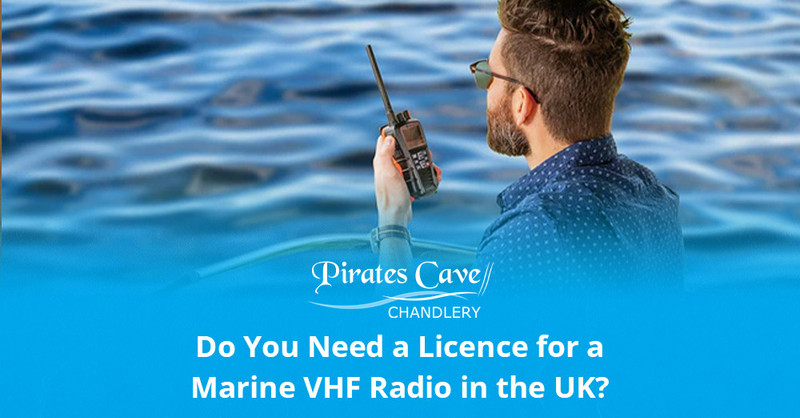
Yes - in normal UK use, a marine VHF radio involves two separate requirements: the radio equipment must be covered by an appropriate Ofcom licence, and the person operating it must hold, or be directly supervised by someone who holds, the relevant maritime radio operator’s certificate. For most leisure-boat users of fixed or handheld VHF and DSC equipment, that operator qualification is the RYA Marine Radio Short Range Certificate, commonly called the SRC.
The terminology is easy to mix up because boat owners often use the phrase “VHF licence” for both documents. This guide separates the Ship Radio Licence or Ship Portable Radio Licence from the operator’s certificate, then explains MMSI numbers, call signs, DSC, handheld radios and what to update when equipment or ownership changes.
If you are still choosing equipment, browse Pirates Cave’s range of marine VHF radios, including fixed VHF radios, handheld VHF radios and VHF antennas.
The essential distinction: Ofcom licenses the radio equipment. The operator certificate demonstrates that a person is qualified to use it. Holding one does not automatically replace the other.
Contents
- Key facts at a glance
- The two separate VHF requirements
- What is a Ship Radio Licence?
- What is a Ship Portable Radio Licence?
- What is the RYA Short Range Certificate?
- MMSI numbers and call signs
- How DSC changes the setup
- Which licence applies to common situations?
- What to check before buying a VHF radio
- Applying, updating and selling a boat
- Common licensing and setup mistakes
- Frequently asked questions
- Technical references
Key facts at a glance
- A marine VHF set normally needs to be listed on either a Ship Radio Licence or a Ship Portable Radio Licence issued by Ofcom.
- The person operating VHF or VHF/DSC on a UK-flagged leisure vessel normally needs the appropriate operator certificate; the RYA SRC is the usual minimum qualification for short-range VHF use.
- A Ship Radio Licence is specific to a named vessel and can cover fixed and portable equipment carried on that vessel.
- A Ship Portable Radio Licence is designed for qualifying portable equipment that is not permanently associated with one vessel. Its operating conditions must be checked before taking the set outside UK waters.
- An MMSI is a nine-digit maritime identity used by DSC and other compatible equipment. It is not the same as the licence itself.
- A vessel call sign and vessel MMSI normally remain associated with the vessel when it is sold, while the outgoing owner surrenders their non-transferable licence and the new owner applies in their own name.
- DSC distress alerts are most useful when the radio has a correct MMSI and a reliable position input from internal or connected GNSS/GPS equipment.
- A genuine emergency is not the time to avoid using an available means of calling for help. That does not remove the normal obligation to license equipment and train operators.
Do you need one VHF licence or two?
You usually need to think about two different documents. One belongs to the radio installation or portable set; the other belongs to the operator.
| Requirement | Issued or administered by | What it covers | Typical leisure-boating document |
|---|---|---|---|
| Equipment licence | Ofcom | The transmitting equipment, identities and other licensable radio apparatus associated with a vessel or portable station | Ship Radio Licence or Ship Portable Radio Licence |
| Operator qualification | Maritime radio-certification system; the RYA manages leisure SRC training and assessment on behalf of the MCA | The person’s competence to operate VHF and DSC equipment correctly | RYA Marine Radio Short Range Certificate (SRC) |
This distinction matters when buying a boat with a radio already fitted. The radio may display a vessel MMSI and the previous owner may have held a licence, but that does not mean the new owner automatically inherits the previous owner’s Ofcom licence or the previous skipper’s operator certificate.
What is a Ship Radio Licence?
A Ship Radio Licence is specific to a vessel. It records the licensable radio equipment carried on that vessel and can include much more than a fixed VHF. Depending on the installation, the licence may need to list portable VHF equipment, AIS transmitting equipment, radar, an EPIRB, a PLB used as ship equipment, MF/HF radio or other maritime radio apparatus.
The licence document should be kept accurate. If you add or remove equipment, change contact details or alter information connected with the vessel, update the licence through the current Ofcom process rather than leaving an old inventory in place.
Does a handheld VHF always need a portable licence?
No. A handheld set that is used as part of one vessel’s radio fit can be listed on that vessel’s Ship Radio Licence. A Ship Portable Radio Licence becomes relevant when qualifying portable equipment is intended to move between vessels or be used without being permanently associated with one named boat.
Handheld DSC radios need particular care because the identity programmed into the radio determines how it may be used. Before entering an MMSI, read the radio manual and the current Ofcom licensing notes. Many sets do not allow the user to change an MMSI once it has been programmed; a dealer or manufacturer reset may be required.
What is a Ship Portable Radio Licence?
A Ship Portable Radio Licence covers eligible portable maritime radio equipment that is not tied to one specific vessel. It can be appropriate for people who take the same handheld VHF between different boats, or who carry a marine handheld while kayaking, paddleboarding or using another small craft.
It is not simply a more flexible version of every Ship Radio Licence. The licence conditions, equipment eligibility and geographical limits matter. In particular, do not assume that a UK portable identity can be used in exactly the same way abroad. Check Ofcom’s current terms and the requirements of the country whose waters you intend to enter.
Before programming a DSC handheld: decide whether the radio will be restricted to one named vessel or genuinely carried between craft. Confirm the correct licence and MMSI arrangement first, because changing a programmed identity may require specialist support.
What is the RYA Marine Radio Short Range Certificate?
The Short Range Certificate is the normal minimum operator qualification for leisure users controlling marine VHF and VHF/DSC equipment on a UK-flagged vessel. The course and examination cover routine radio procedure, channels, distress and urgency communications, Digital Selective Calling and the wider Global Maritime Distress and Safety System.
The certificate belongs to the individual. It does not belong to the boat, and it does not automatically license the equipment. A family boat may therefore have one Ship Radio Licence but several crew members who each hold an SRC.
Can an unqualified person use the radio under supervision?
The licence conditions allow equipment to be operated by, or under the direct supervision of, a suitably certificated operator. In practice, the qualified person must be able to supervise the operation properly. It is sensible for regular crew to take the SRC rather than relying on one person always being available.
What about an emergency?
In grave and imminent danger, use every effective means available to summon assistance. Correct training remains valuable because a calm, structured Mayday, a properly configured DSC distress alert and an accurate position can reduce delay. The emergency principle should not be treated as a reason to operate routinely without the required documents.
What are an MMSI number and vessel call sign?
An MMSI - Maritime Mobile Service Identity - is a nine-digit identity used by DSC radios, AIS transponders and certain other maritime systems. It allows a digital call or distress alert to identify the station that sent it.
A call sign is another internationally recognised station identity. A vessel may use its name in routine voice calls, but its call sign and MMSI are important formal identifiers and should be kept with the radio documentation and distress-card information.
| Identifier | Typical association | Main purpose | Important ownership point |
|---|---|---|---|
| Vessel MMSI | Named vessel under a Ship Radio Licence | Identifies the vessel in DSC and compatible systems | Normally remains associated with that vessel when ownership changes |
| Portable MMSI | Qualifying portable equipment under a Ship Portable Radio Licence | Identifies the portable maritime station | Follows the licensed portable arrangement, subject to current Ofcom conditions |
| Call sign | Named vessel | Unique radio-station identification for voice and records | Normally remains with the vessel rather than the outgoing owner |
Do not copy an MMSI from another radio simply because the two sets are on the same boat. Check how the fixed and portable equipment is licensed and how the radio manufacturer permits the identity to be programmed.
What is DSC and why does configuration matter?
Digital Selective Calling allows compatible marine radios to send formatted digital alerts. A DSC distress alert can transmit the station identity and, when position data is available, the location. It is then followed by the appropriate voice distress call on Channel 16.
A DSC-capable radio should be treated as a system rather than a box:
- the correct MMSI must be programmed
- the radio needs a reliable internal or connected position source
- the antenna, coaxial cable and connectors must be suitable and correctly installed
- the distress cover and controls must remain accessible
- crew should know how to make both a digital alert and a voice call
- the licence inventory and emergency information should be kept current
If you are fitting a fixed set, budget for the complete installation, including a suitable VHF antenna, mounting hardware, coaxial cable, power supply and any required data connection. Poor antenna installation can severely reduce real-world range even when the radio itself is working.
Which licence applies in common situations?
| Situation | Likely equipment licence route | Operator consideration | What to confirm |
|---|---|---|---|
| Fixed VHF installed on one yacht or motorboat | Ship Radio Licence for the named vessel | Regular operators normally need the SRC | List the fixed set and other licensable equipment; confirm vessel MMSI and call sign |
| Handheld VHF kept as a backup on one named boat | It may be listed on that vessel’s Ship Radio Licence | Regular operators normally need the SRC | Check whether the set has DSC and which MMSI arrangement the current Ofcom guidance permits |
| One handheld moved between several boats | Ship Portable Radio Licence may be appropriate | The operator still needs the relevant certificate | Check portable licence conditions and territorial limits |
| Handheld carried while kayaking or paddleboarding | Ship Portable Radio Licence may be appropriate for eligible equipment | The operator still needs the relevant certificate | Confirm waterproofing, flotation, attachment and suitable emergency procedure |
| Boat purchased with an MMSI already programmed | New owner applies for a licence in their own name while retaining the vessel identity as directed by Ofcom | The new owner’s own operator qualification is separate | Obtain the old licence details and avoid creating a duplicate identity |
| Vessel with MF/HF as well as VHF | Ship Radio Licence with the full equipment inventory | A higher or different operator certificate may be needed | SRC alone does not cover every long-range radio installation |
This table is a practical guide, not a replacement for the licence terms. The exact answer can change with the equipment, identity programmed into it, flag state and operating area.
What should you check before buying a marine VHF radio?
- Decide between fixed and handheld. A fixed set usually offers greater transmit power and can use a higher external antenna. A handheld is portable and valuable as a backup, but its lower antenna height and battery capacity affect practical range and endurance.
- Decide whether DSC is required. For many boat owners, a DSC radio with an integrated or connected position source provides an important additional distress-alerting capability.
- Plan the identity before programming. Establish whether the set belongs to one vessel or will travel between craft.
- Check the complete installation. Include antenna location, cable run, power protection, data connections, waterproofing and accessibility.
- Check the operating area. A portable licence and portable MMSI arrangement may carry restrictions outside the UK.
- Arrange training. Complete the SRC before relying on the radio for routine or emergency communication.
- Record the details. Keep the licence, MMSI, call sign, radio model and emergency calling format available on board.
Customers comparing communications equipment may also find relevant options in marine AIS and PLBs and EPIRBs. These systems can complement VHF, but they do not all alert the same people or use the same network.
How do you apply, update a licence or deal with a boat sale?
Use Ofcom’s current ship-radio licensing portal and guidance. Online applications and amendments are normally the simplest route. Before starting, gather:
- the vessel name, type and registration details where applicable
- any existing call sign and MMSI
- the previous licence details when buying a used vessel
- a list of transmitting and other licensable maritime equipment on board
- the make and model of DSC, AIS and beacon equipment
- current owner and emergency-contact information
When you buy a used boat
Ask for a copy of the existing radio-licence details before completion. Ofcom states that the licence itself is non-transferable, while the vessel call sign and MMSI stay with the vessel. The previous owner should surrender their licence; the new owner applies in their own name and retains the vessel identities as instructed by Ofcom.
When you sell a boat
Surrender your licence and provide the new owner with the vessel’s radio identity information. Remove personal emergency-contact documentation, but do not casually erase or reprogram the vessel MMSI without confirming the correct process.
When you change equipment
Update the inventory on the licence. If a radio or AIS unit is replaced, arrange any necessary MMSI programming with the supplier or manufacturer. Do not create a new vessel MMSI merely because the hardware has changed.
Common marine VHF licensing and setup mistakes
| Mistake | Why it matters | Better approach |
|---|---|---|
| Assuming the SRC licenses the radio | The SRC belongs to the operator; the equipment still needs the appropriate Ofcom licence | Hold both the relevant equipment licence and operator qualification |
| Assuming a previous owner’s licence transfers with the boat | Ofcom licences are non-transferable | Retain the vessel identity but apply in the new owner’s name |
| Programming an MMSI before choosing the licence route | Many radios restrict user changes after initial programming | Confirm vessel-specific or portable use first |
| Entering a vessel MMSI into a radio that will be moved between boats | The identity may incorrectly represent the vessel and breach licence conditions | Follow current Ofcom guidance for portable DSC sets |
| Fitting DSC without a position source | A distress alert may not include an automatic current position | Use internal GNSS or a correctly configured data connection and test according to the manual |
| Ignoring antenna installation | Range can be limited by poor antenna height, cable, connectors or corrosion | Choose and maintain the complete antenna system |
| Keeping no written distress prompt | Stress can make even trained crew forget the message order | Display a vessel-specific Mayday card near the radio |
Choose the right marine communications equipment
Browse marine VHF radios, including fixed and handheld VHF options, together with antennas and installation accessories.
Before ordering, note your boat type, intended operating area, whether the radio will move between vessels, and whether you need DSC, AIS reception or an integrated GPS. For product help, contact the Pirates Cave team. Licensing and certification applications remain the responsibility of the owner and operator.
Frequently asked questions about UK marine VHF licences
Do I need a licence just to own a marine VHF radio?
The practical licensing requirement concerns installation and use of transmitting radio equipment. A set carried or installed for use should be covered by the appropriate Ofcom licence, and routine operation should be by, or under the direct supervision of, a suitably certificated operator. Check the current Ofcom terms for any unusual situation involving display, resale, repair or test equipment.
Is the RYA SRC the same as a Ship Radio Licence?
No. The SRC is an operator qualification held by a person. A Ship Radio Licence is an Ofcom equipment licence associated with a named vessel. A properly documented leisure installation normally needs both: the vessel or portable equipment must be licensed, and the person controlling it must hold the relevant operator certificate.
Do I need an SRC for a handheld VHF?
Normally, yes. The RYA states that the SRC is the minimum qualification required to control fixed or handheld VHF and VHF/DSC equipment on a UK-flagged vessel that is voluntarily fitted with radio. The portability of the set does not remove the operator-training requirement.
Is a Ship Radio Licence free?
Ofcom currently provides an online licensing route, and online applications have traditionally been available without a fee, while paper routes may differ. Processes and fees can change, so use Ofcom’s live portal rather than relying on an old article or printed form.
Can one Ship Radio Licence cover more than one radio?
Yes. A vessel’s licence can list multiple items of qualifying radio equipment, including a fixed set and handheld backup, provided the equipment is correctly declared and used within the licence conditions. Update the licence when the inventory changes.
Can I use one handheld VHF on several boats?
A Ship Portable Radio Licence may be suitable for eligible portable equipment used across different craft. If the handheld DSC set is programmed with one vessel’s MMSI, its use may be restricted to that vessel. Establish the intended use and confirm the current Ofcom conditions before programming the radio.
Does an MMSI expire?
A vessel MMSI is intended to remain associated with the vessel rather than being replaced whenever the owner or radio changes. The owner must keep the related licence and contact information current. Portable identities follow the portable licensing arrangement and should be managed in accordance with Ofcom’s instructions.
Can I change an MMSI in my radio?
Many marine radios allow the MMSI to be entered only once by the user. A mistaken or changed identity may require an authorised dealer, distributor or manufacturer service procedure. Verify the number against the licence before confirming it on the radio.
Do I need a separate licence for AIS?
An AIS transponder is normally listed as part of the relevant Ship Radio Licence because it transmits a maritime identity. An AIS receiver that does not transmit is different. Review the Ofcom equipment list and update the licence when installing a transponder.
Does a VHF radio replace a PLB or EPIRB?
No. VHF communicates locally with coast stations and other vessels within radio range; a 406MHz PLB or EPIRB uses the international satellite distress-alerting system. Many boats carry complementary equipment so that one failure, range limitation or man-overboard scenario does not remove every means of calling for help.
Can I rely on a mobile phone instead of VHF?
A phone is useful but does not provide the same shared marine distress channel, water resistance, local vessel-to-vessel communication or dedicated DSC functions. Coverage and battery life can fail. Choose communications equipment according to the voyage, distance offshore, vessel and crew rather than treating one device as universally sufficient.
What should I do if I buy a boat with the wrong MMSI displayed?
Do not transmit routine DSC calls until the identity has been checked. Compare the displayed number with the vessel documents, previous licence and any AIS or beacon records. Contact Ofcom about the licensing record and the radio manufacturer or authorised service agent about safe reprogramming.
Technical references
Check the live versions of these sources before publication or after a regulatory change:
- Ofcom: Ship radio and ship portable radio licensing
- Royal Yachting Association: Licensing onboard electronics
- Royal Yachting Association: Marine Radio SRC course and exam
- Royal Yachting Association: Mayday and Pan Pan calls
Important: This guide provides general information for UK leisure boating and was prepared in August 2026. Licence conditions, international use and certification rules can change. Confirm the current position with Ofcom, the RYA, the vessel’s flag administration and the radio manufacturer before programming identities or operating abroad.